


PROBLEM
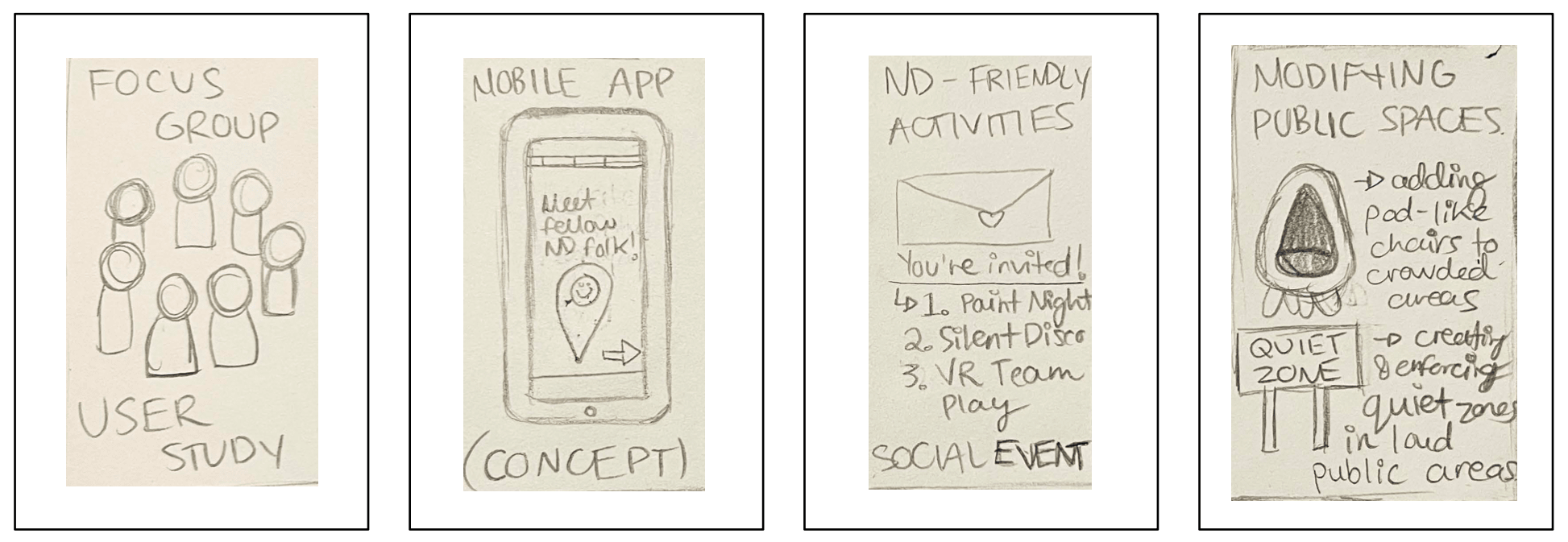
Neurodivergent adults may struggle to form and maintain lasting friendships and/or professional relationships. How might we find ways to combat this by uniting neurodivergent folk within physical spaces – based on shared interests?
SOLUTION
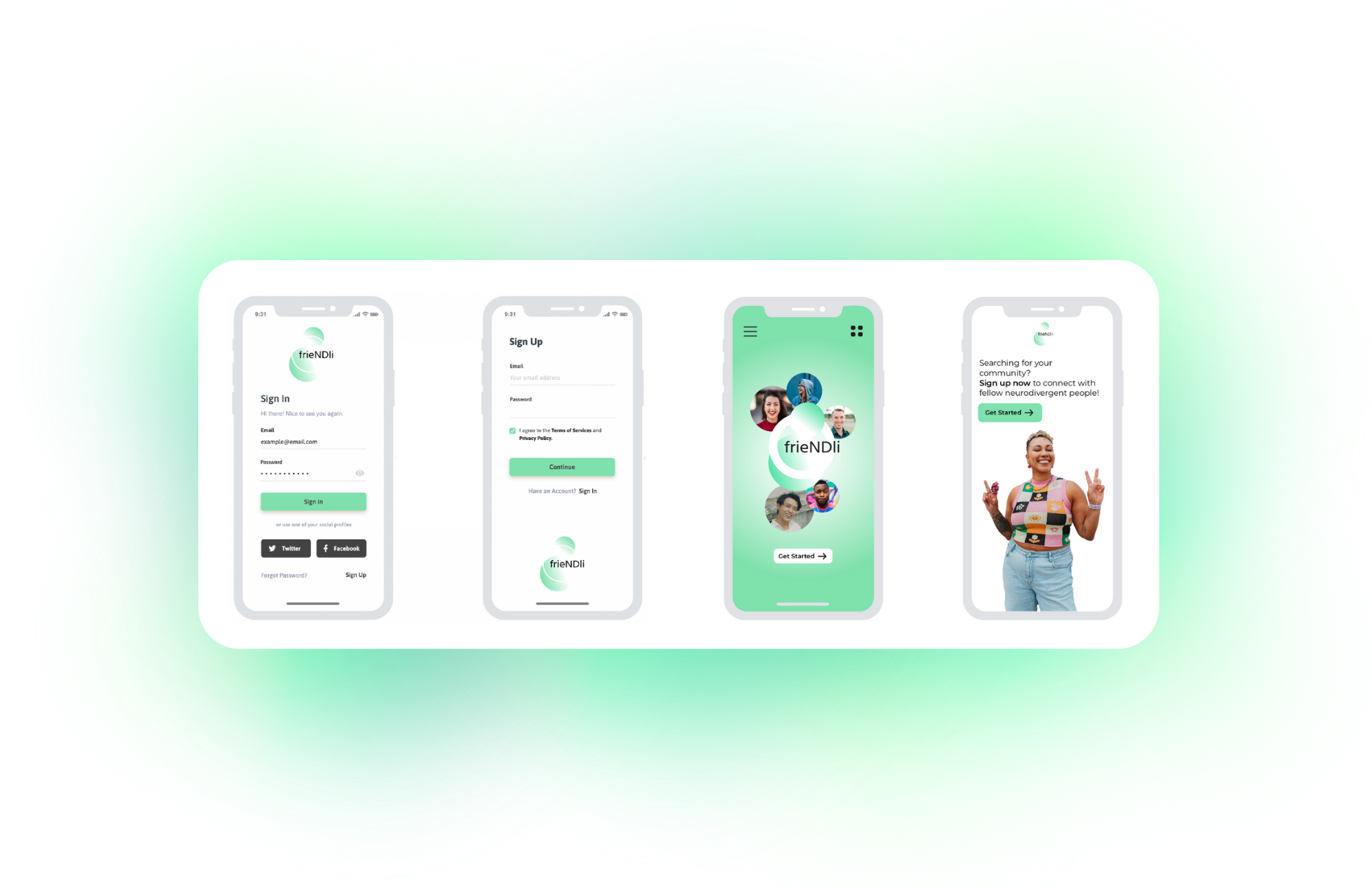
Create and design a social networking platform for neurodivergent adults seeking meaningful platonic/professional connections.
KEY INSIGHTS
When designing these components, the needs of the user are to be taken into careful consideration for the product to function effectively. Neurodivergent (ND) adults need to find a way to connect with other ND adults because the social alienation that comes with being neurodivergent can be very isolating for some. Based on research conducted for this case study, friendships between ND and non-ND or “neurotypical” adults generally tend to either a) lack longevity, or b) lack emotional depth.
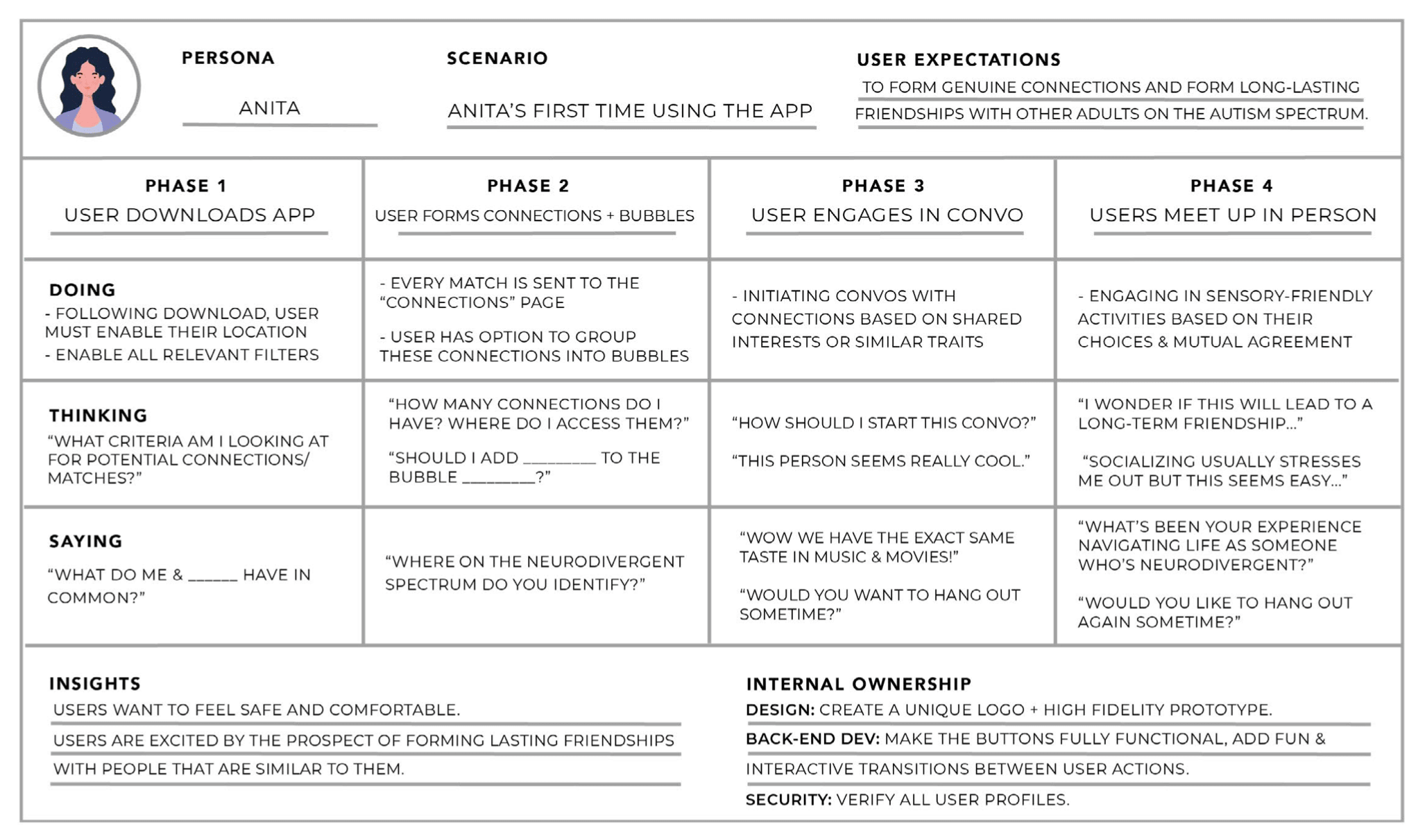
As shown above, there is an Affinity Diagram created from data collected from several interviewees, in addition to a Persona I designed based on that data.
USER FLOW SKETCHES
Screen 1: Initial loading screen – reveals a simple animation.
Screen 2: Mandatory dialog box prompting user to enable live location from phone Settings if they would like to continue to use the ‘Connections’ feature.
Screen 3: Map and all applicable filters. Other features: menu icon, logo, filters, user profile, connections, live map, and bubbles.
Screen 4: Enabling location will reveal other users of the app in the area (within a 30km radius). To “connect”, the user must swipe right, to “ignore”, the user must swipe left (following the standard mental model used by apps like Bumble, Hinge, Tinder, etc.)
Screen 5: If the user is swiped right on by the other person as well – the screen will display a dialog box saying “You made a connection!”
Screen 6: If the user clicks on the dialog box – the following screen will display a list of all connections made.
Screen 7: The user then selects a connection and is taken to a chat bubble with their new connection. Other features: “Add to bubble?” CTA, and “Remove connection” CTA.
Screen 8: “Bubbles” page, where every social group that the user belongs to will be displayed.
Screen 9: Upon clicking on any one of these bubbles, the next screen will zoom into the bubble to show the names of other users in that bubble; the group’s name (which is editable by Admin); and the theme/description.
Screen 10: User Profile screen – complete with profile photo, name, summary, and other details.
MORE INSIGHTS
The use of language is very important when designing CTAs or dialog boxes for this app. Since ND folk tend to interpret things literally, instructions and goals should be clear, but optimistic. The ultimate goal of the app is to encourage and inspire neurodivergent people to connect with one another – especially since this is something they have the tendency to struggle with.)
Project Type: Case Study (Conceptual)
Project Duration: 9 Weeks
Project Scope: visual design, brand identity development, user research, wireframing, digital prototyping, user experience, design strategy
Completed For: OCAD University
 SARAH SAEED